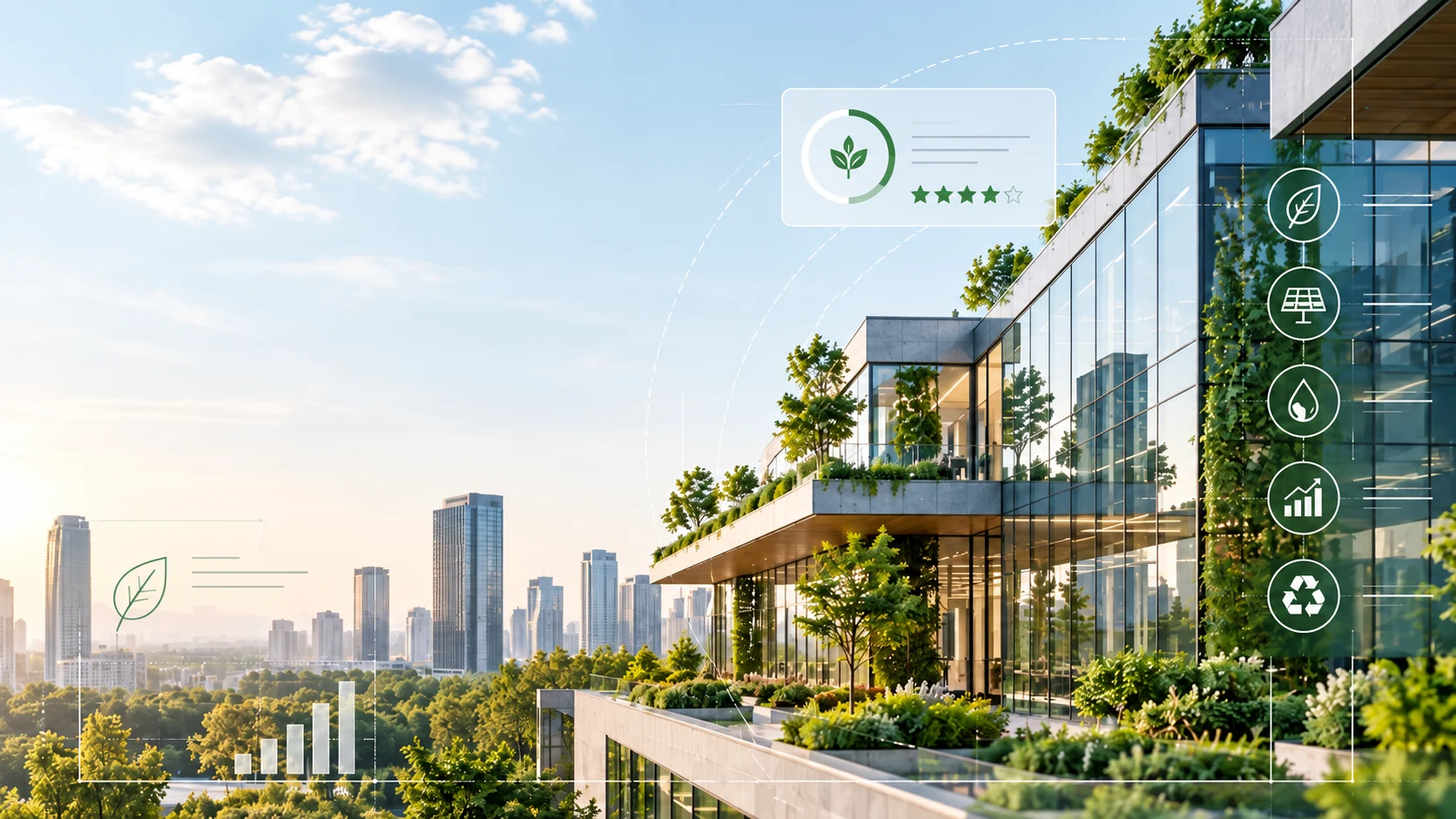
The sustainability performance of a building is no longer measured solely by its energy consumption. From embodied carbon and responsible material selection to water efficiency, indoor environmental quality and biodiversity, sustainable construction requires a comprehensive approach.
BREEAM certification provides an internationally recognised framework for assessing and verifying the sustainability performance of buildings through measurable criteria.
What Is BREEAM Certification?
BREEAM stands for Building Research Establishment Environmental Assessment Method. First developed in the United Kingdom in 1990 by the Building Research Establishment (BRE), it is one of the world's most established sustainability assessment methods for the built environment.
BREEAM aims to reduce the environmental impacts of buildings, improve resource efficiency, support occupant health and encourage sustainable performance throughout relevant stages of a building's lifecycle.
Rather than assessing individual green features in isolation, BREEAM considers how design decisions, construction practices, building systems and operational strategies contribute to overall sustainability performance.
Its internationally recognised assessment framework enables developers, investors, owners and building users to better understand and communicate a property's environmental performance.
What Are the Main BREEAM Assessment Criteria?
BREEAM evaluates sustainability through a range of categories. The specific criteria, weighting factors and minimum requirements vary according to the assessment scheme and technical version.
1. Energy Efficiency and Carbon Emissions
Energy demand, building systems, operational efficiency and greenhouse gas emissions are important considerations. Newer BREEAM standards place increased emphasis on whole-life carbon, including operational and embodied emissions.
2. Water Efficiency
Water-efficient fixtures, consumption monitoring, leak detection and appropriate alternative water sources can contribute to improved building performance.
3. Health and Wellbeing
Indoor air quality, daylight, thermal comfort, acoustic performance and occupant wellbeing are assessed to encourage healthier and more comfortable indoor environments.
4. Materials and Life Cycle Impacts
BREEAM promotes responsible material selection and the consideration of environmental impacts throughout the building lifecycle.
Life Cycle Assessment (LCA) and Environmental Product Declarations (EPDs) can provide valuable evidence in relevant assessment credits.
5. Waste Management
Construction waste reduction, responsible resource management, reuse and recycling help minimise environmental impacts during construction and operation.
6. Transport and Accessibility
Access to public transport, cycling facilities, pedestrian infrastructure and other sustainable mobility solutions may contribute to the assessment.
7. Land Use and Ecology
Site conditions, habitat protection, ecological enhancement and biodiversity are considered to support responsible development.
8. Management and Pollution
The assessment can include responsible construction practices, building commissioning, handover procedures and the control of environmental pollution, including noise and light.
What Are the BREEAM Certification Levels?
BREEAM uses five main rating levels to communicate the sustainability performance achieved by a project:
- Pass: Demonstrates a recognised baseline of sustainability performance.
- Good: Indicates performance above conventional practice.
- Very Good: Reflects advanced sustainability practices.
- Excellent: Recognises high environmental performance and effective sustainability management.
- Outstanding: Represents the highest level of achievement within the rating framework.
Commonly referenced BREEAM New Construction rating thresholds are 30%, 45%, 55%, 70% and 85%, respectively.
However, the applicable technical manual must always be consulted. Achieving a numerical threshold alone does not necessarily guarantee certification, as mandatory minimum standards and additional requirements may apply.
How to Obtain BREEAM Certification
The certification process requires coordinated planning, technical assessment and documented evidence.
Step 1 — Select the appropriate BREEAM scheme
The assessment route depends on whether the project involves new construction, an existing building, refurbishment or another eligible development type.
Step 2 — Conduct a pre-assessment
An initial assessment identifies achievable credits, potential challenges and the target certification rating.
Step 3 — Develop a sustainability strategy
The project team defines measures related to energy, carbon, water, materials, indoor environmental quality, ecology and other relevant categories.
Step 4 — Implement and document requirements
Designers, engineers, contractors and sustainability specialists coordinate technical analyses, reports, specifications and supporting evidence.
Step 5 — Complete independent assessment and certification
An appropriately licensed BREEAM Assessor evaluates the project and submits the required documentation through the applicable assessment process.
Following successful review and quality assurance, the relevant certification body issues the certificate.
Depending on the scheme, assessments may include interim design-stage certification and final post-construction certification.
What Are the Benefits of BREEAM Certification?
BREEAM offers more than a sustainability rating. It provides a structured approach for incorporating environmental objectives into building development and management.
Key potential benefits include:
- Resource efficiency: Identifying opportunities to reduce energy and water consumption.
- Healthier environments: Supporting improved indoor air quality, thermal comfort and occupant wellbeing.
- Environmental responsibility: Addressing carbon emissions, ecological impacts and resource use.
- Greater transparency: Providing independently assessed sustainability information for investors and other stakeholders.
- Long-term resilience: Encouraging consideration of climate risks, operational performance and future asset requirements.
Actual financial and environmental outcomes depend on the project and its operational performance.
What Is the Difference Between BREEAM and LEED?
BREEAM and LEED are internationally recognised green building certification systems, both designed to encourage more sustainable construction and operation.
BREEAM originated in the United Kingdom and offers multiple assessment schemes for different asset types and lifecycle stages.
LEED, developed in the United States, also assesses important sustainability factors such as energy, water, materials, indoor environmental quality and site considerations.
Although their objectives overlap, the systems differ in scoring methods, prerequisites, documentation and certification procedures.
The most suitable system depends on the project's location, building type, technical characteristics and investment objectives.
How Much Does BREEAM Certification Cost?
There is no universal fixed cost for BREEAM certification.
Costs vary depending on building size, complexity, location, the assessment scheme, target rating and the technical studies required.
A comprehensive budget may include registration and certification fees, consultancy services, specialist assessments, testing and potential improvements to building design or systems.
Considering certification requirements early in the design process can help project teams plan resources and avoid unnecessary late-stage modifications.
BREEAM Consultancy Services at Altensis
Successful BREEAM certification requires more than preparing documentation. It involves integrating sustainability objectives into architectural design, engineering decisions, construction management and building performance.
Altensis provides comprehensive BREEAM consultancy and assessment services, supported by expertise in energy modelling, acoustics, ecology, commissioning and related technical disciplines.
By establishing clear sustainability goals from the early stages of a project, Altensis helps project teams address assessment requirements through a coordinated and measurable process.
Explore Altensis' BREEAM consultancy and assessment services to determine the most suitable certification approach for your development.
BREEAM Consultancy and Assessment – Altensis
Back to blog